Established Tocumwal NSW · 1951

Batescrew/Heritage

Manufacturing since 1951

Three-quarters of a century making the heavy iron that moves the country's water — from a single shop on the Newell Highway.

Founded by Duncan Bate · est. 1951 · Tocumwal NSW

Our story.

Batescrew workshop, Tocumwal FIG. 03 · The Tocumwal workshop · Newell Highway
Timeline

A 75-year file.

1951 Founded by Duncan Bate A small machine shop opens on the Newell Highway at Tocumwal NSW — the start of pump manufacture on this site. Year One
1952 Pump Number Six shipped Our oldest still-running pump leaves the factory under serial number 6. Seventy-three years later it is still installed. In service
1958 Pump 208 — the 9/11 axial A 9/11 axial pump shipped this year. It will run continuously for 61 years before its first service in January 2019. 61 yrs continuous
1960s Axial-flow family established Single-stage axial-flow pumps in vertical, angled and columnless configurations become the company's signature product. Catalogue
1970s High-Head valves introduced Penstock and channel-gate valves, designed and manufactured in-house, sealing in both directions to six metres head. Valves
1978 Snowy Mountain Trout — 24/7 since A trout-farm lift station begins continuous service. Forty-seven years on, the same site is still pumped by Batescrew units. Reference
1980s Export to South-East Asia & the Pacific Pumps and valves shipped to Cambodia, Thailand, Vietnam, Malaysia, Indonesia, Papua New Guinea, Fiji, Sri Lanka — and later to the United States, China and Zambia. Reach
1985 Murray Princess — pumps as thrusters Two 21/24 axial-flow pumps installed as bow and stern thrusters on a 61-metre Murray River paddle steamer. Versatility
1990s In-house AS2417 test facility One of Australia's few privately owned high-capacity pump test bays — pumps to 1.22 m bore at 3,000 L/sec. Verification
2003 Waranga Basin Drought Pumping Works Twelve Model 24/30 axial-flow pumps — first contract — and the start of a long-running working relationship at Yungera Station with four 1,100 L/sec turbines. Reference
2000s Re-manufacture service formalised The parts archive opens to other makes — Ornell, Lane & Bowler, Hoxton, Pomona, Weir, Everflow, Flygt rebuilt to as-new performance. Service
2019 Pump 208 returns for first service The 9/11 axial installed in 1958 comes in for its first service after 61 years of continuous operation. Before-and-after photos on file. Workshop
Today 7,500+ pumps still on file Every pump shipped since 1951 has a serviceable file. The next service call has the previous one to read. 2025
Essay

A 1951 idea, still in use.

In 1951, Duncan Bate set up a small engineering shop on the Newell Highway between Sydney and Melbourne, in the heart of the Murray irrigation country. The duty was simple: build pumps and valves heavy enough to survive the channels they would be installed in, with a parts file kept long enough to outlive their first thirty-year service interval.

Three-quarters of a century later, we are still on the same site. The company is still family-led. The lathes are CNC now and the drawings are vector files, but the bench against which the work is measured has not moved. We still measure runout to a thousandth of an inch, still expect a packing gland to be repacked rather than replaced, and still keep the file open on every pump that leaves the shed.

In that file are 7,500 pumps. Our oldest running unit, pump number six, was installed in 1952 and is still in service. A 9/11 axial-flow pump installed in 1958 came in for its first service in January 2019 — sixty-one years of continuous duty. It is not uncommon for pumps to come into the workshop after thirty years of service: the owner may have changed hands, the paint has flaked off and corrosion at the waterline has occurred, but the pump still runs as well as the day it was installed.

The same archive serves operators of pumps no longer supported by their original manufacturers — Ornell, Lane & Bowler, Hoxton, Pomona, Weir, Everflow, Flygt — and continues to serve them.

The pumps have travelled. They sit in irrigation districts across Cambodia, Thailand, Vietnam, Malaysia and Indonesia; in plantations in Papua New Guinea, Fiji and Sri Lanka; in the United States and China; in the copper belt of Zambia; and in every state of Australia. The shopfront is still on the Newell Highway, the phone is still answered by a person, and the parts are still on the shelf.

If your pump has been in service for thirty years, it is not because nothing went wrong. It is because someone, somewhere, kept the drawings.
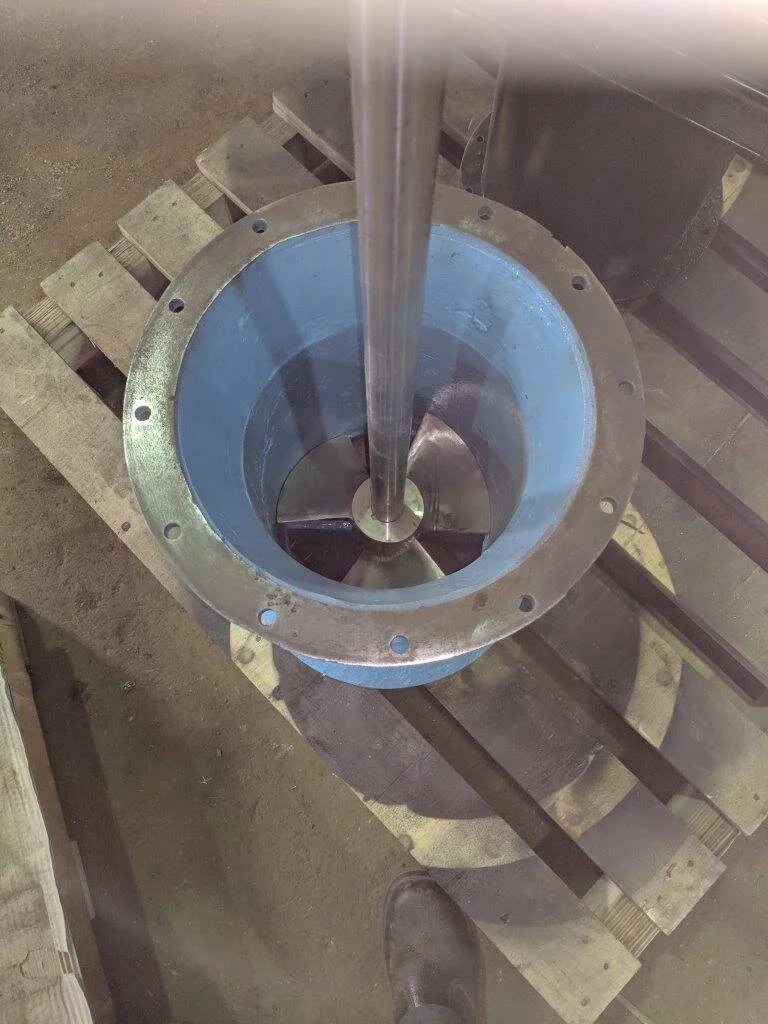
CastingsCasting
MachiningMachining
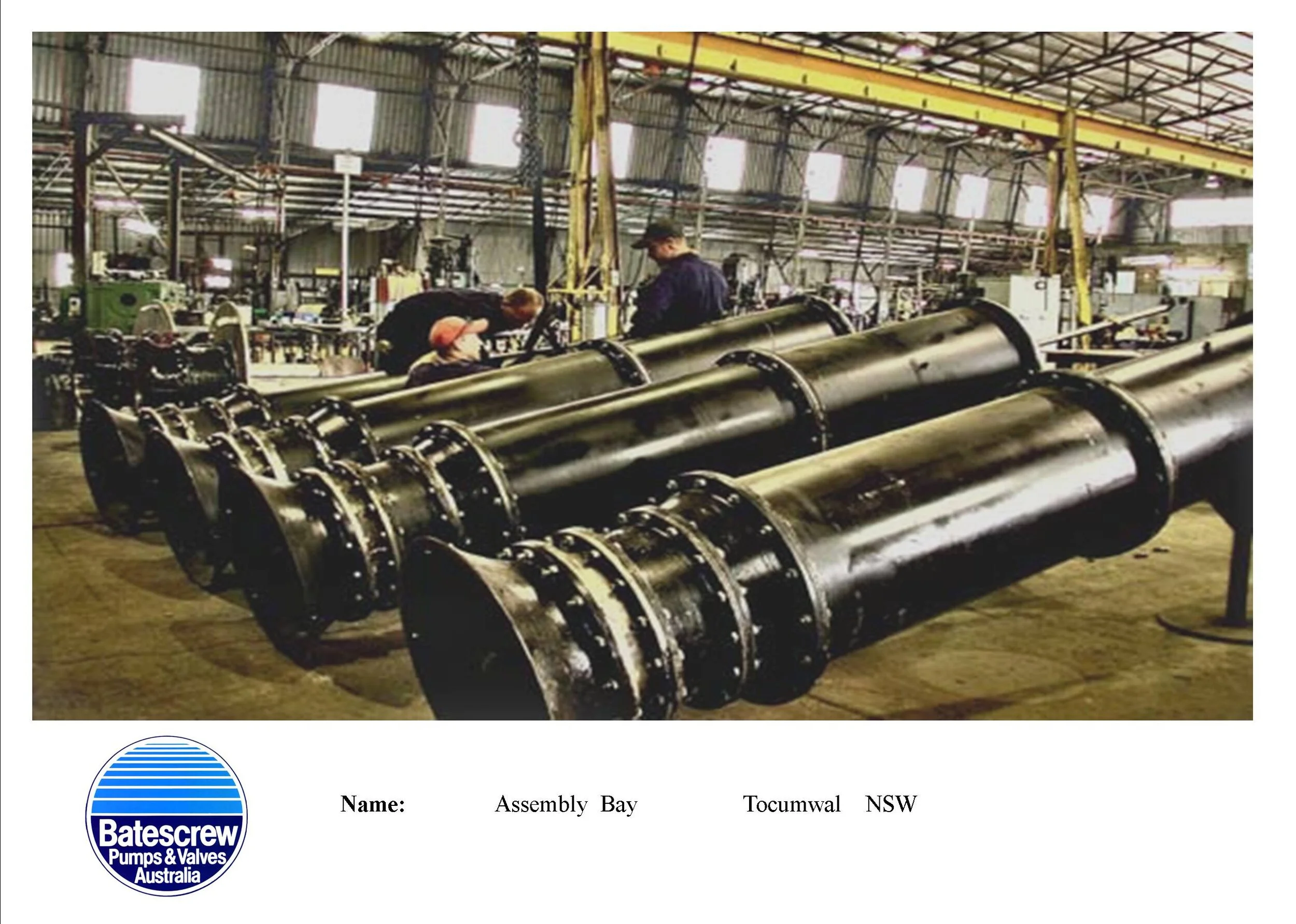
Assembly bayAssembly
1951est.
Year founded · Tocumwal NSW
7,500+ on file
Pumps with open service files
10countries
Asia · Pacific · Africa · Australia
61years
Pump 208's first service interval
Principles

Three things that have not changed.

Built to be opened.

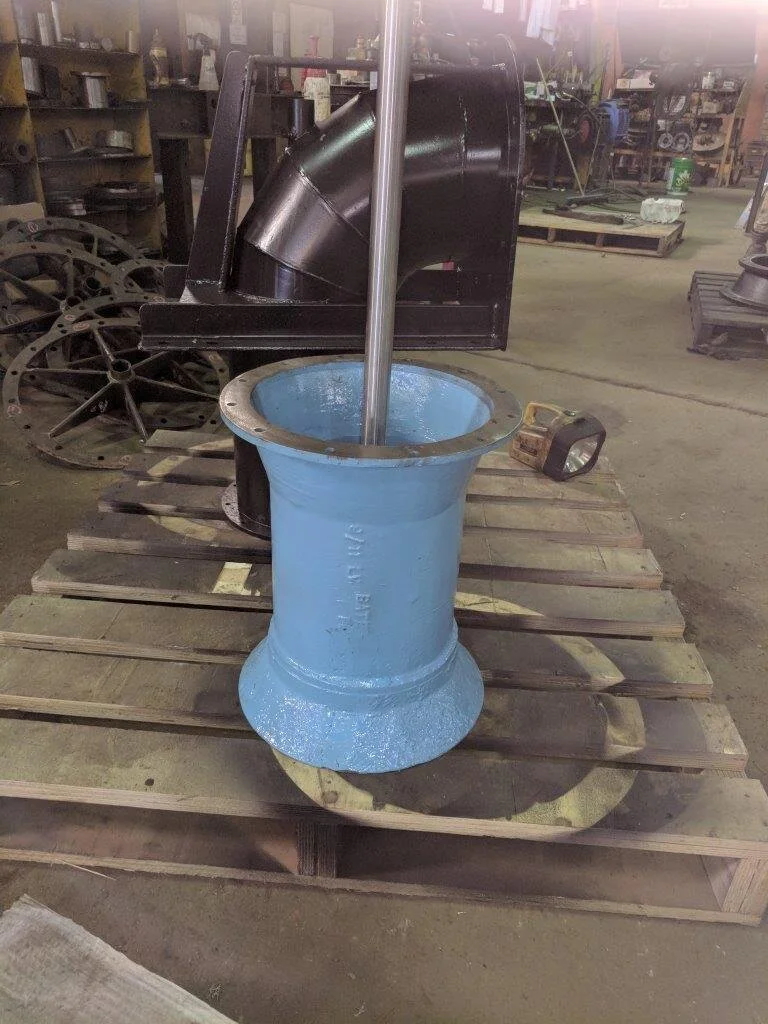
A pump is not a sealed unit. Designs allow vertical dismantling, accessible packing glands, replaceable shafts and standardised flanges. If the pump cannot be serviced, it has been wrongly designed.

Documented for life.

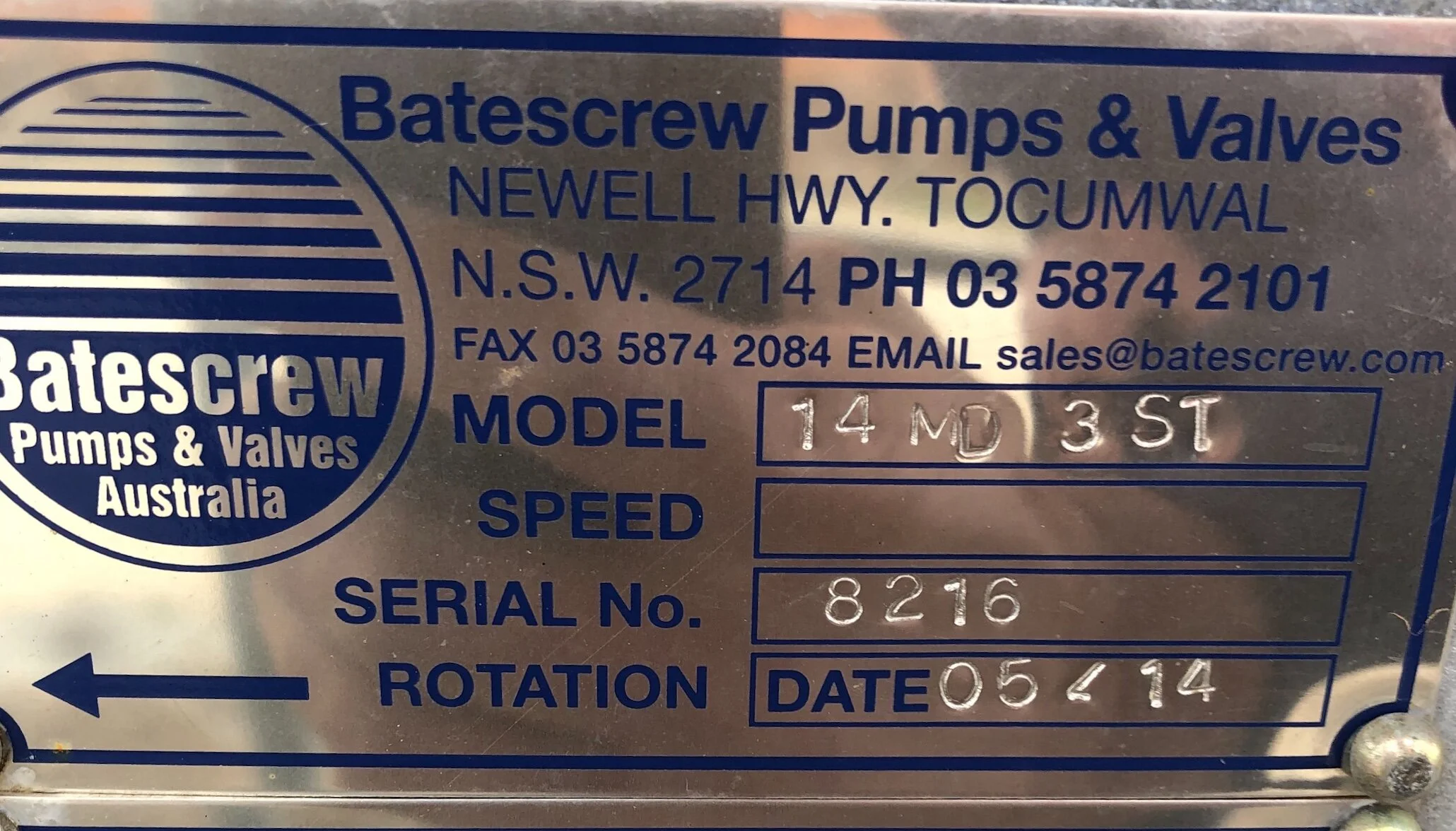
Every unit gets a file. The drawings, materials, modifications and signed test report stay with the serial number for as long as the pump is in service. We have files for pumps shipped before colour television.

Answered by a person.

The phone at the factory is picked up by a person — Sharon at the front desk, or an engineer at the bench. Sales and technical conversations are not routed through call centres. They are had in Tocumwal.

The Founder

Duncan Bate, OAM — recognised by the Order of Australia Medal for his contribution to engineering and rural industry.

Meet the team