Axial-flow is the family that built our reputation. Single-stage units suit bulk transfer at modest head — irrigation channels, drainage, river diversion, large stormwater pumping. We make them in vertical, angled and columnless configurations, with vane-shape and impeller selection tuned to the duty point.
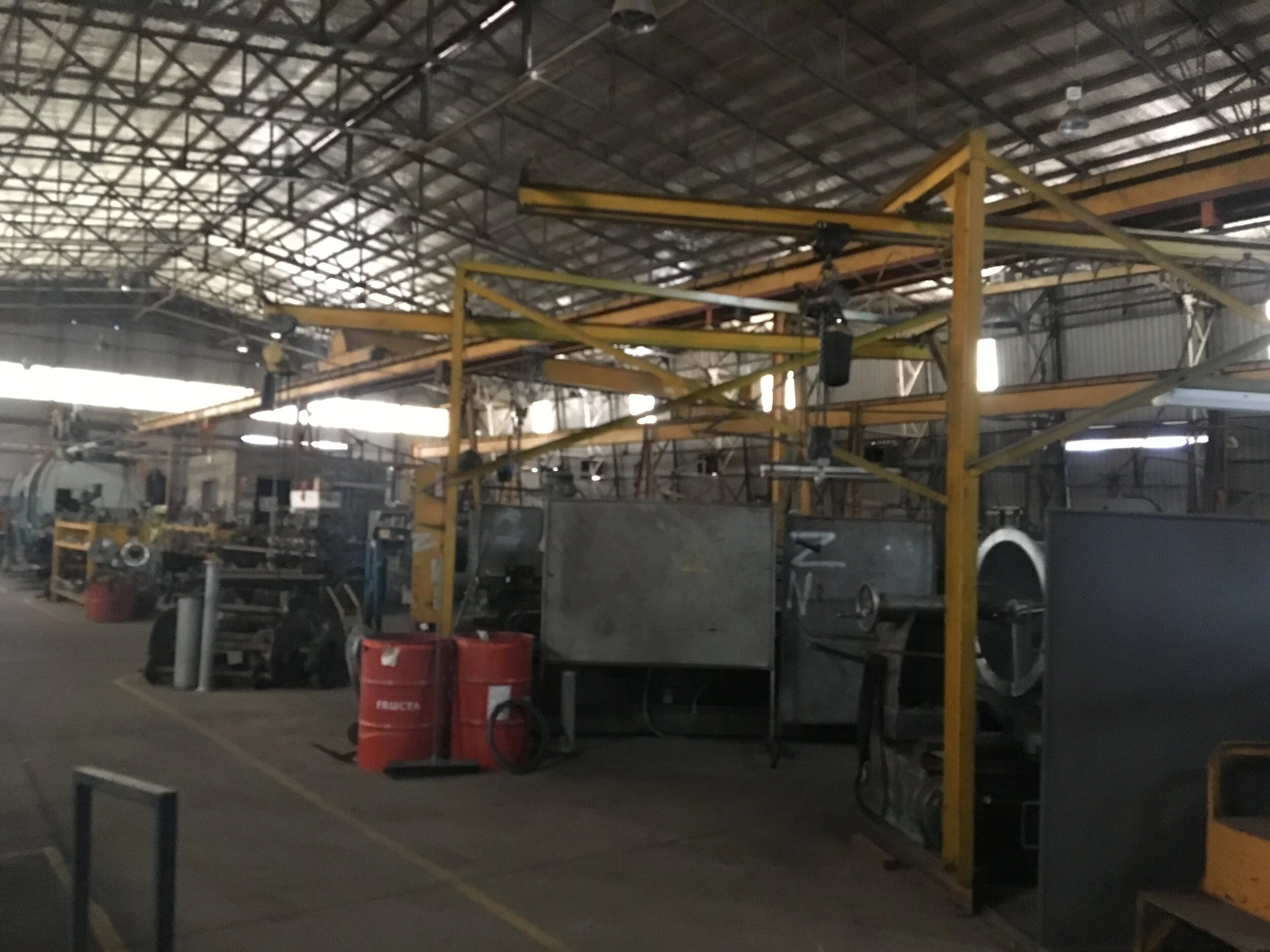
Each pump is matched at the design stage by our Technical Services Department: tender specifications, system curves, sump design and slide-rail layouts are produced in-house. The drive options table — vertical or angle, electric, diesel, PTO or petrol — covers nearly every situation we have ever been asked to pump from.
For an idea of the upper end, the Waranga Basin installation in 2003 used twelve of our Model 24/30 single-stage pumps to deliver 1,850 megalitres per day. Twenty-two years later, the parts file for those twelve units is still open on our shelves.
 Vertical
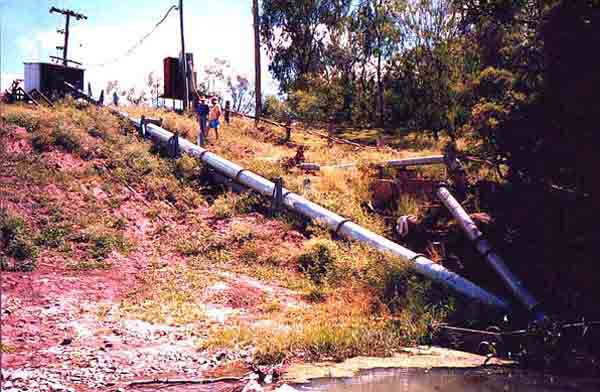 Angle
Angle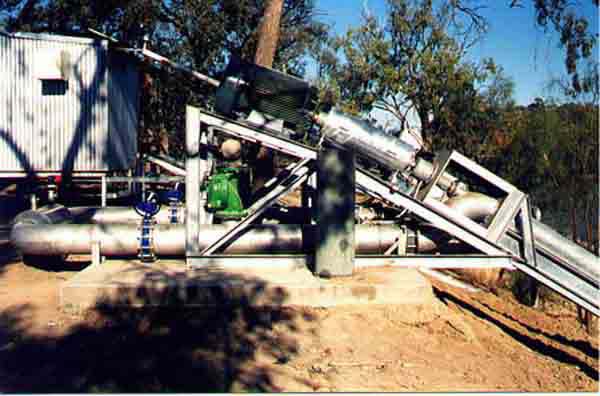 Columnless
Sump-mounted with the prime mover above the slab. The most common configuration in irrigation channel installations.
A short-set configuration that drops the drive column entirely. Used where overall height is constrained or where a compact installation is wanted.
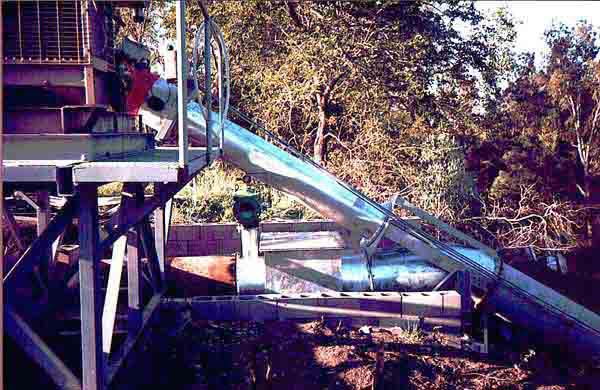
Inclined-mounting on a slide rail — used for river-bank pumping, variable water levels and minimal civil works.
Where head increases beyond the working envelope of axial flow, we move to mixed-flow turbine pumps. Lineshaft construction allows extended drive columns to draw from deep wells, river basins and irrigation sumps with overhead drive isolated from the wet end.
The Batescrew turbine range shares its drive options, thrust-bearing adjustment and design-calculation service with the axial-flow family — the same documentation pack, the same parts archive, the same long maintenance horizon.
Impeller performance curves are available for every model in the range, and our test facility can verify any pump up to 1.22 m bore against AS2417.
Effluent pumps are a different problem from clean-water pumps: they need to pass solids without clogging, survive abrasive grit, and live submerged in chemistry that destroys most seal arrangements. We make them in two impeller styles — vortex for clog-free pumping of chunky abrasive solids, volute for thick sludge.
Most installations are line-shaft driven sump pumps, with the body fully immersed to eliminate priming. Lubrication is usually our Fresh-Water Flush system: clean low-pressure water is delivered to EPDM rubber bearings, passes the bottom bearing and is expelled into the product stream by secondary centrifugal vanes on the rear face of the impeller. Aggressive product is kept off the shaft and seal — a particular advantage in raw and secondary sewage applications.
Typical installations: wineries, dairies, piggeries, abattoirs, small-town sewage treatment, and industrial waste sumps.
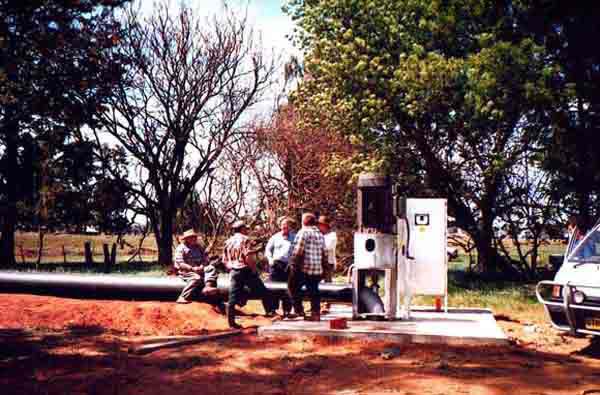 Line-shaft sump
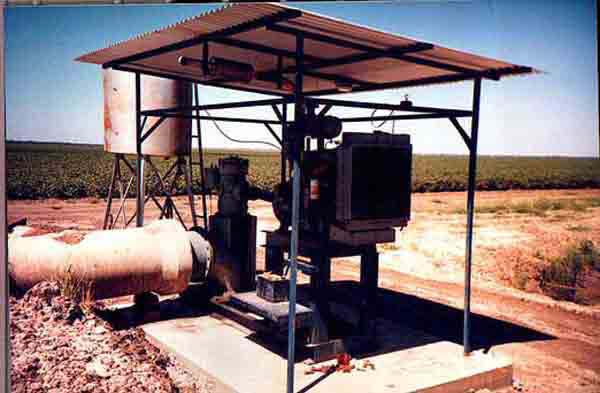 Vortex impeller
 Volute body
Clog-free, abrasion-resistant. The right choice when the product is full of chunky entrained solids and grit.
Effective movement of thick, viscous sludge. Higher head per stage; suited to thicker, more uniform product streams.
Portable and petrol-driven pumpsets fill the duty between the bench and the irrigation channel — site dewatering, agricultural transfer, supplementary stock water, fire-fighting reserve. Built on the same engineering principles as our channel pumps, scaled to a frame and a Honda or diesel prime mover.
Petrol-driven units suit short-duty, intermittent service where mains power is unavailable. Diesel sets are specified where running hours accumulate. Both share the Batescrew approach to spares — the parts list is open and the seal kits are on the shelf.
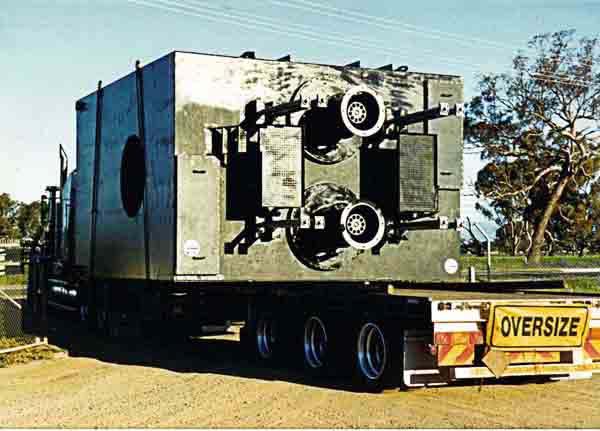
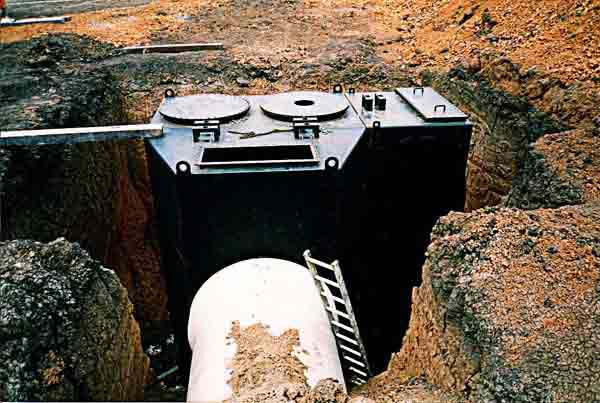
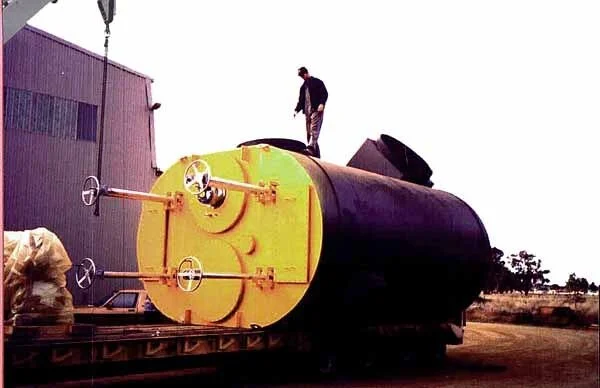
For sites where a full pumping plant is wanted but engineering capacity on the ground is limited, we ship the whole installation pre-built. The Box Columnless module is a factory-assembled junction box for multiple pipelines, complete with the necessary pumps, valves, power units and fittings.
Installation is, in our standing description, “almost as simple as take it off the truck and drop it in the hole.”
A detailed brochure including a quotation work-sheet is available — please contact our office for the latest engineering data and to discuss your duty conditions.